QORM documentation
QORM (Query · Observe · Render · Mutate) is a pure-Go, agent-native cross-platform app platform: write an app as JSON, run it live, sign it, and package it for web / iOS / Android / desktop — readable and writable by both people and AI agents.
The name is what you do with a live app: Query the node tree and state over HTTP/MCP, Observe it in real time over SSE, Render it on every platform, Mutate it through actions and the write API.
2-Prompt Agent Quickstart: 1. "Load QORM framework MCP configuration and Skill library (https://github.com/qorm/platform), set up environment, keep DevTool active." 2. "Use QORM to create a new app in ./my-app, launch native window, and build: <your app idea here>."
New here? Read the top-level README for the big picture and the CLI, then dive in below. The examples/ apps are the canonical, runnable reference — when a doc and a running example disagree, trust the example.
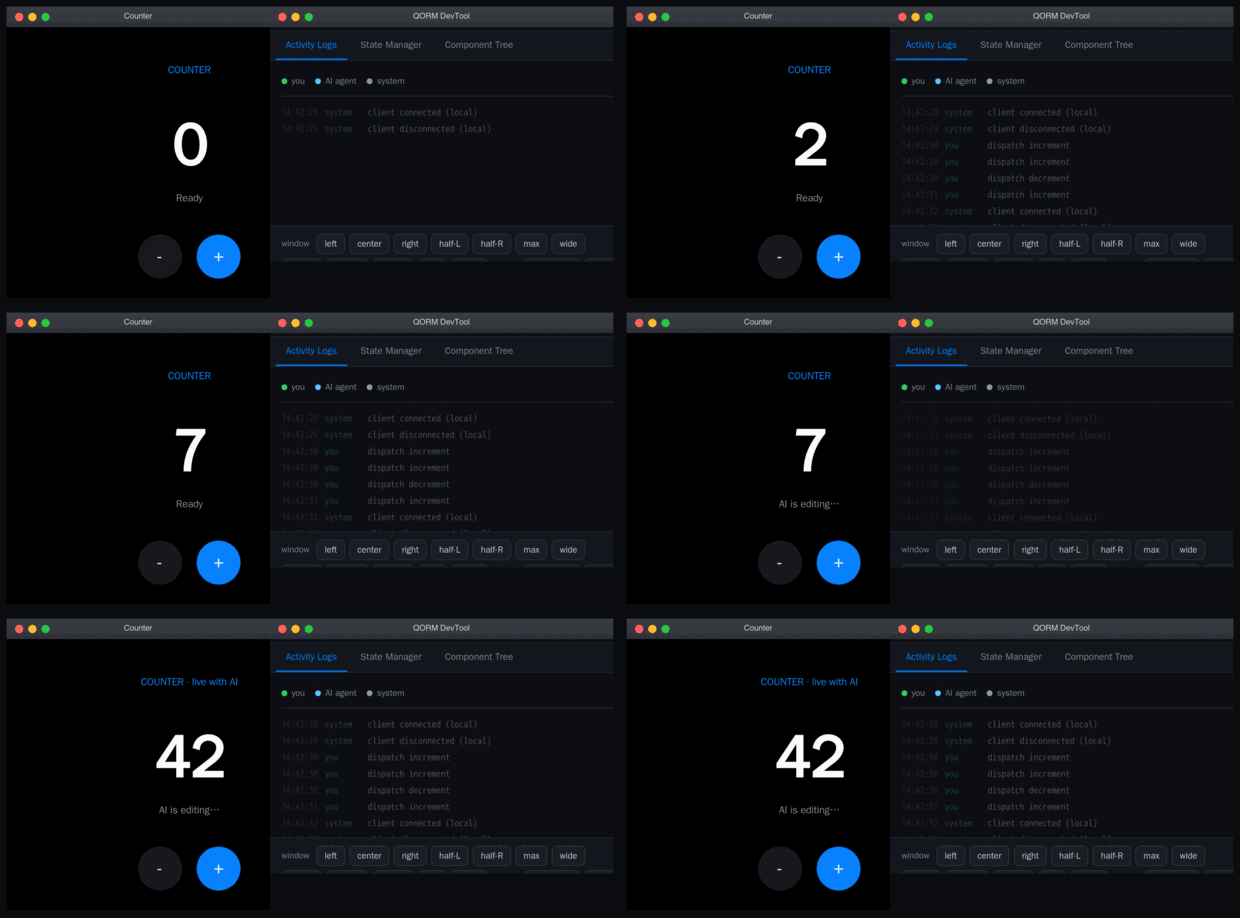 A shared session in motion: the AI edits the app and the change appears live in a native window while the activity is logged.
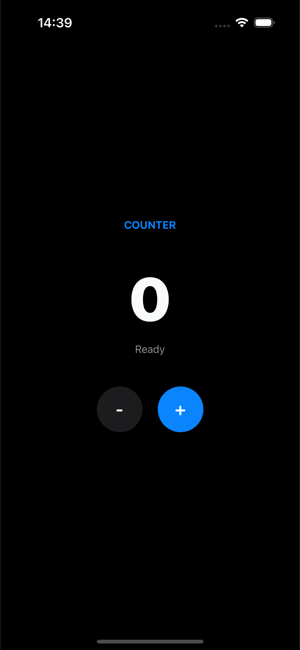
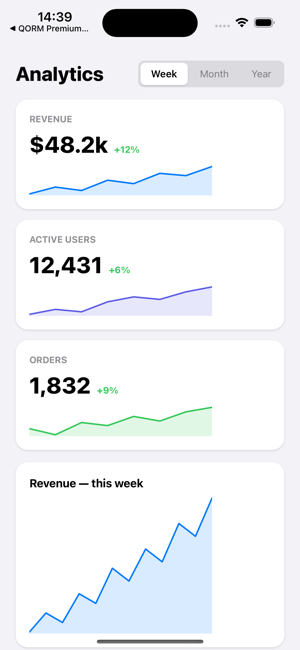
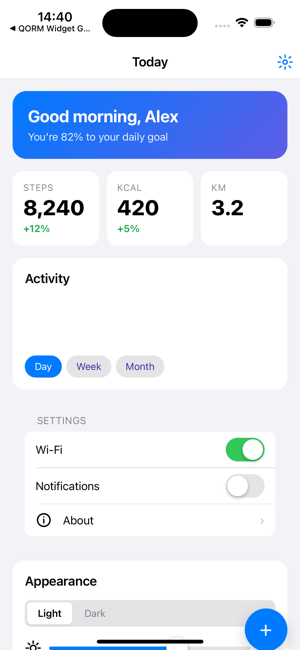 The counter, the analytics dashboard, and a fitness app — one JSON runtime across examples.
Maintainers (implementation board)
Sprint analysis, progress, and audit logs for multi-agent workstreams (not the product API surface):
Learn
- Project structure — the layout of a QORM app folder, file by file
- Getting started — install, your first app, the run loop
- First scene · First action · First component · First platform pack
- Responsive layout —
when,viewport.*, andbreakpoint.* - Expressions — the
{{ … }}language: scopes, operators, index access, and every builtin function - QScript — the
.qsscripting language:let,if,for,while,fn,call(), and the sharedlib.qs - QSS & canvas styles — stylesheets plus declarative canvas effects (filter, mask, snap, FLIP, spring,
fx/timeline, tint, pixelated, rotate/scale/flip/skew,boardcamera +tilemap)
Reference
The full, auto-generated contract lives on the separate API reference — node & widget props, the widget catalog, actions & state, gestures, animation, navigation, the HTTP/SSE surface, and the public Go package. It is extracted from the runtime source, so it never drifts.
App-facing capability docs stay here with the platform guides:
- Capabilities — built-in hardware/OS ops, callbacks, and platforms
- MCP tools — the tools an AI agent drives the live app with
Platforms & packaging
- Platform support matrix — what works where, at a glance
- Mobile · Desktop · Web · Mini-app
- User middle-layer — add your own native ops in one Go file that compiles into desktop and mobile/web WASM
Examples (walkthroughs)
- Counter · Todo · Login · Dashboard
- Games (canvas):
tetris·mario·raiden·g2048— live at qorm.com/games - Motion showcase:
canvas-fx - Ultimate showcase (RichText, Video, WebView, SVG Morphing):
canvas-ultimate - The full set of runnable apps lives in
examples/.
Human-AI collaboration
- Build with your AI assistant — point your AI at QORM to scaffold, edit, run, and verify apps
- Collaborating on a live app — a human and an AI agent on the same running app, each seeing the other (the QORM premise)
For AI agents
- Agent integrations — drop-in MCP config + a QORM skill for Claude / Cursor / Windsurf
- MCP tools — the Model Context Protocol surface to read, edit, and verify a live app
- Verifying an app — self-verify edits with
qorm measure/qorm check - Skills · Permissions
Trust & security
- Bundle signing — ed25519 verify-the-bundle delivery
- Permission model · Security model
Commercial use
- Terms — the source is MIT; a Patreon membership covers commercial white-labeling